Building permits for tiny houses in Germany
Whether you need a building permit for your tiny house depends mainly on its use, location and federal state. This overview shows the key points.
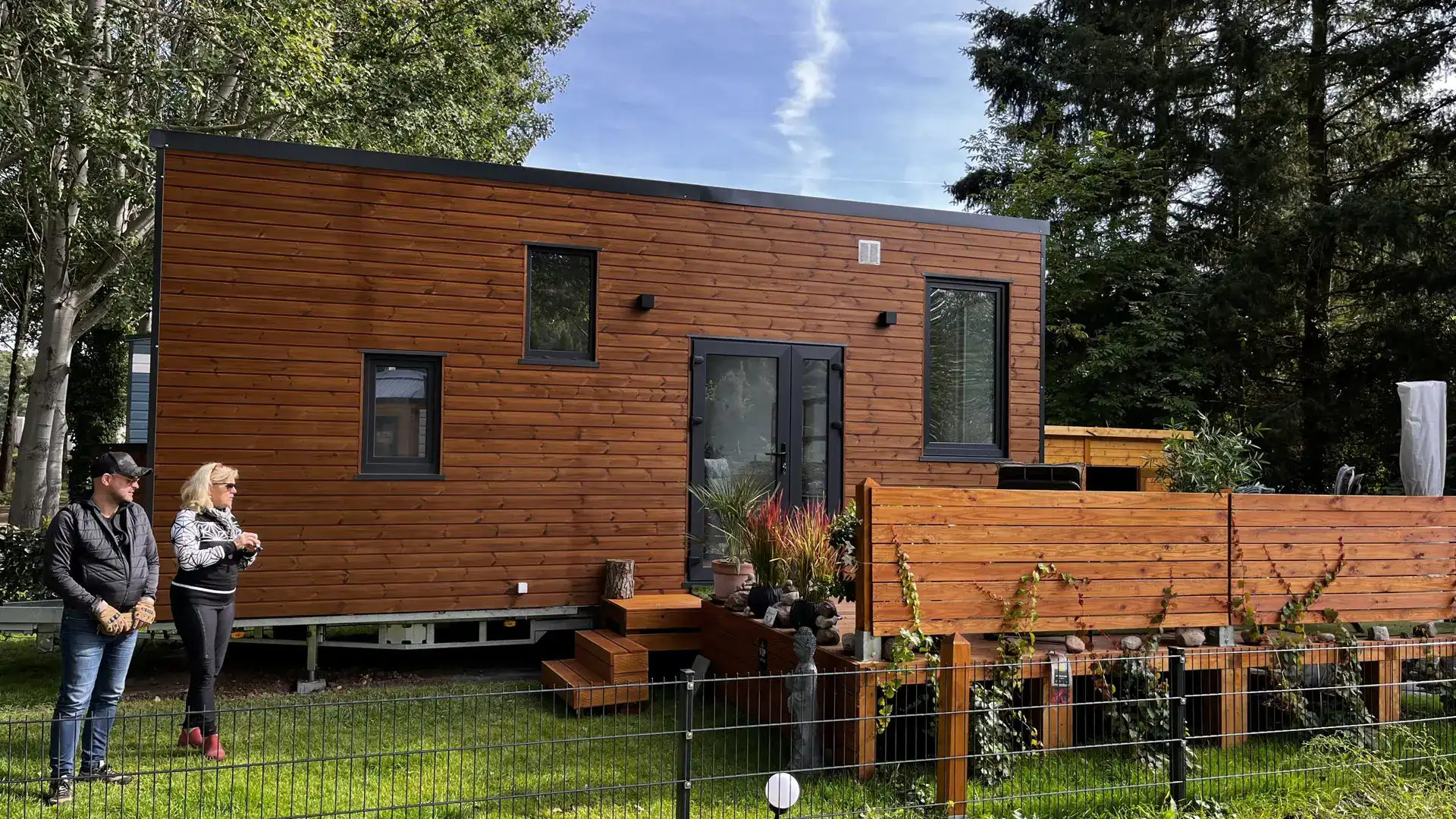
Principle: a permanently occupied tiny house is a building
As soon as a tiny house stands permanently in one place and is used for living, it counts as a building under planning law – regardless of whether it has wheels. A building permit is therefore usually required, and the house must stand on a plot that allows residential development.
It comes down to the use
What matters is how you use the house. Permanent living is subject to stricter requirements than mobile or commercial use, for example as holiday accommodation on a camping or glamping site. On designated pitches, the rules of the respective site operator often apply.
Rules are a matter for the federal states
In Germany, building law is a matter for the federal states. Whether and from what size a permit is needed therefore differs from state to state. The decisive factors are your municipality’s development plan and the relevant state building code. Austria and Switzerland have their own cantonal or regional rules.
What to look out for with the plot
- Does the development plan allow residential use?
- Are there connections for power, water and wastewater?
- Is the access suitable for a low-loader and crane?
- What minimum distances and heights apply locally?
What Green Cube House takes care of
Every one of our houses is delivered with a GEG certificate and structural engineering – two documents often required for the permit. We advise you in advance on siting, foundation and the permit situation in your region, so your project rests on solid ground.
This article is a general overview and is no substitute for legal advice. For binding information, contact your responsible building authority.
Questions about the permit for your house?
We advise you on the requirements in your region and supply all the necessary certificates.